Posts

Blogbook -- Antiracism Ain't Easy

Image
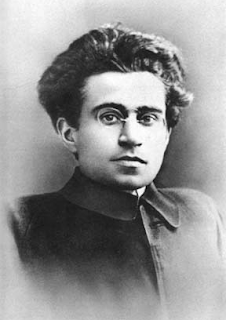
Entry 20 It may seem like we’ve been talking about antiracism this whole time. And in a way, we have. But let’s be clear about what exactly I’m offering in this blogbook, which can seem hard to discern if your assumption is that this blogbook is a “how to” guide to antiracist teaching. In one sense, it is, but not conventionally so. Antiracism ain't easy.  Antiracism is not really a particular pedagogy or a set of practices. We might identify a pedagogy or practice as antiracist in a classroom by some outcome it produces, but because racism and White supremacy are so much a part of everything -- they are a discourse made of both our material conditions and the ways we talk about our conditions -- it’s easy for a pedagogy or practice to be co-opted by the hegemonic structures around us. As Gramsci explains, this is how hegemony works. It constantly changes, adapts, and co-opts the forces and agents that work against it. Why fight your enemy head on, when you can incorporate them int...

Blogbook -- No Avoiding Race and Racism

Image
Entry 19 It is not hard to argue that the early racial discourses from men like Birnier, Lineaus, Buffon, and Blumenbach were also racist (see entry 6 ). From their origins, these discourses were hierarchical and placed people in uneven racial categories. That is, from the beginning race was inherently a hierarchical set of categories that came out of European discourses of science and philosophy by folks like Hobbes, Locke, and Bacon. And these thinkers were influenced by Aristotle’s scientific rhetorics of categorization (see entry 5 ). So the very idea of race as a set of categories which was easily placed into hierarchies of value could be argued is racist.  Today, this leads some to claim that just mentioning, using, or identifying race in any way is racist. We should therefore stop using race altogether as a way to reference people, either as a group or individuals. The idea is that you can stop racism by avoiding the idea of race in language, which doesn’t allow such ideas t...

Blogbook -- The Affordances of Racist Discourse in Literacy Classrooms

Image
Entry 18 Let me summarize what I’ve been discussing in the last four entries of this blogbook (entries 14 , 15 , 16 , and 17 ). I’ve been asking us to think of racism in our classrooms, texts, language practices, and world as a discourse. But the idea of what “racist discourse” means is bigger than just words. Racist discourse is both material and linguistic. It’s actions and decisions, and it’s language and stories that we use to explain and talk about those actions and decisions. Marxian dialectic and hegemony, as well as verum-factum and verum-certum that explain Vicovian common sense, help describe how we often consent to our own oppressions, that is, consent to racist discourse as the dominant set of conditions we all live and participate in, regardless of our better intentions or ethical stances on things.  Our consent to hegemony usually comes as “preferable systemically-constructed consciousness” -- that is, consciousness that is created in the system as preferable -- defin...

Blogbook -- Racist Hegemony And the Language Choices We Make

Image
Entry 17 Vico’s common sense and Marxism’s dialectic help us understand racist discourse as a dialectic that is both language and logos and material practices and decisions, all of which are accomplished in the world around us. These two aspects of racist discourse reinforce each other. Being a mutually reinforcing dialectic means that racist discourse is racist common sense, which also means racism is systemic, or structural in our world, work, and lives.  To really take advantage of what Marxian theory offers, we shouldn’t stop with classical Marxism. Theorists such as Antonio Gramsci, reconsidered the classical Marxist dialectic. He explained that actually both the base and superstructure operate simultaneously, influencing each other. You cannot consider one before the other, as classical Marxism did -- that is, everything sprang out of the material base. So for Gramsci and others the dialectic of base (material conditions and outcomes) and superstructure (language about and re...